


Quick answer: Choose a bathroom window covering based on how close it is to shower spray, how much humidity reaches it, and the privacy you need. Near direct water or persistent damp, look for a product explicitly rated for that exposure. A “moisture-resistant” label does not automatically mean “waterproof.”
Start with the window’s exposure
Bathroom windows do not all face the same conditions. A window inside a shower enclosure may get direct spray; one above a tub may see frequent condensation; a window across the room may mainly experience humid air. The closer the covering is to water and damp surfaces, the more important the exact material, hardware and care instructions become.
| Window location | What to prioritize | Questions for the seller |
|---|---|---|
| Inside a shower or splash zone | A product explicitly designed for direct water exposure. | Does the exact model allow this location? What cleaning and installation instructions apply? |
| Above a tub or near the shower | Moisture resistance, accessible cleaning and clearance from wet surfaces. | Is the rating for humidity only or direct contact with water? What hardware or finish is used? |
| Across the bathroom from water | Privacy, light control and a material suitable for the room’s humidity. | Does the manufacturer allow this shade material in a bathroom, and how should it be cleaned? |
Which materials are worth comparing?
Composite or faux-wood blinds and shutters: These can be a practical starting point for a humid room when the exact product is described as moisture-resistant. For instance, Bali identifies selected faux-wood and composite blinds as options for high-humidity rooms. Check the named product’s care guidance rather than extending that claim to every faux-wood or composite item.
Aluminum or vinyl blinds: They may suit a bathroom where wipe-clean surfaces and adjustable privacy matter. Verify the finish and hardware for the chosen product, and confirm whether its light gaps and slat position provide the privacy you want.
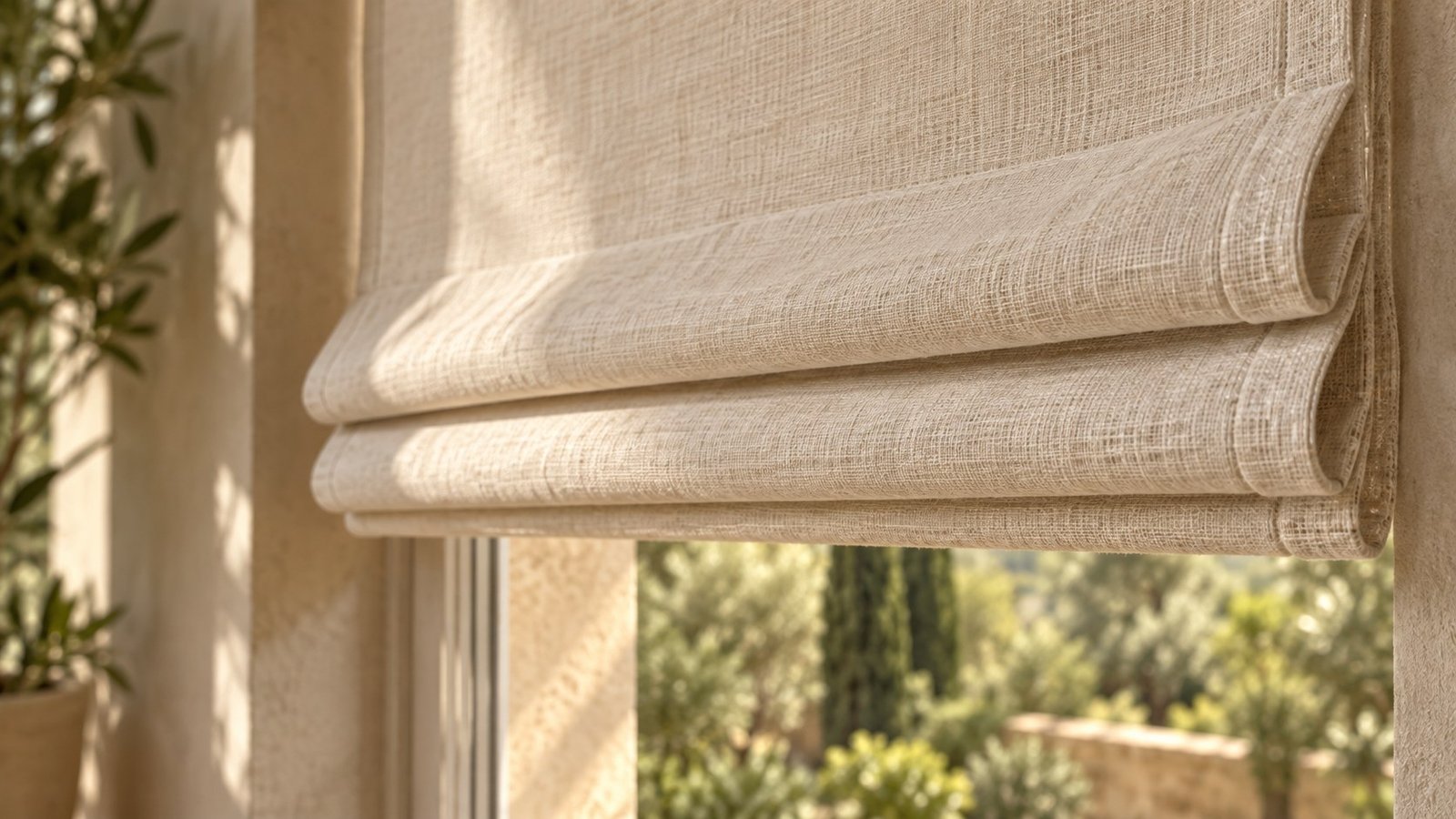
Fabric shades: A roller, cellular or Roman shade can work in some bathrooms, particularly when it is away from direct splash and the maker permits bathroom use. Fabric, lining and operating parts vary. Norman’s bathroom guidance makes the suitability of fabric shades depend on ventilation and distance from showers, tubs and splash zones. Use the manufacturer’s care instructions for the specific fabric.
Waterproof products: Reserve this description for a product whose manufacturer explicitly says it is suitable for the exposure in question. A moisture-resistant blind may handle humid air but still be unsuitable for a shower enclosure or repeated direct spray.
Balance privacy with daylight
Decide whether you need privacy during the day, after dark, or both. If the bathroom faces a neighbor or public area, check a fabric sample or the seller’s privacy description under the lighting conditions that matter in your home. A light-filtering material can soften daylight, but the words alone do not tell you how clearly shapes may show through at night. For a broader explanation of fabric categories, see our guide to blackout, light-filtering and solar shades.
Ventilation still matters
A shade is not a moisture-control system. The U.S. Environmental Protection Agency recommends using bathroom exhaust fans that vent outdoors to remove moisture, and advises running a bathroom fan or opening a window when showering. Ventilation and drying damp surfaces help address the room conditions that coverings must live in; choosing a moisture-tolerant product does not replace them.
Before ordering, check whether the covering or its hardware will sit against a wet sill, block a window that you need to open, or be difficult to clean. Follow the product’s installation and maintenance instructions. If you are considering fabric folds, compare the material and care requirements in our Roman shade style guide.
Frequently asked questions
Are Roman shades suitable for bathrooms?
It depends on the fabric, lining, hardware, ventilation and location of the window. Ask the manufacturer whether the exact shade is approved for bathroom use and follow its cleaning guidance. Avoid assuming that all Roman shades tolerate steam or splashes.
Is moisture-resistant the same as waterproof?
No. Use “waterproof” only when the manufacturer applies that claim to the selected product and its intended location. Confirm whether it covers humidity, occasional splashes or direct water exposure.
Will a privacy shade keep the bathroom private at night?
That depends on the material and the difference between indoor and outdoor lighting. Check the manufacturer’s privacy description and, where possible, evaluate a sample in similar lighting before ordering.
Research checked October 23, 2026. Sources: U.S. EPA guidance on controlling moisture at home; Bali heat and humidity product guidance; and Norman bathroom window treatments. Product materials and permitted locations vary by model; confirm current manufacturer instructions before ordering.