
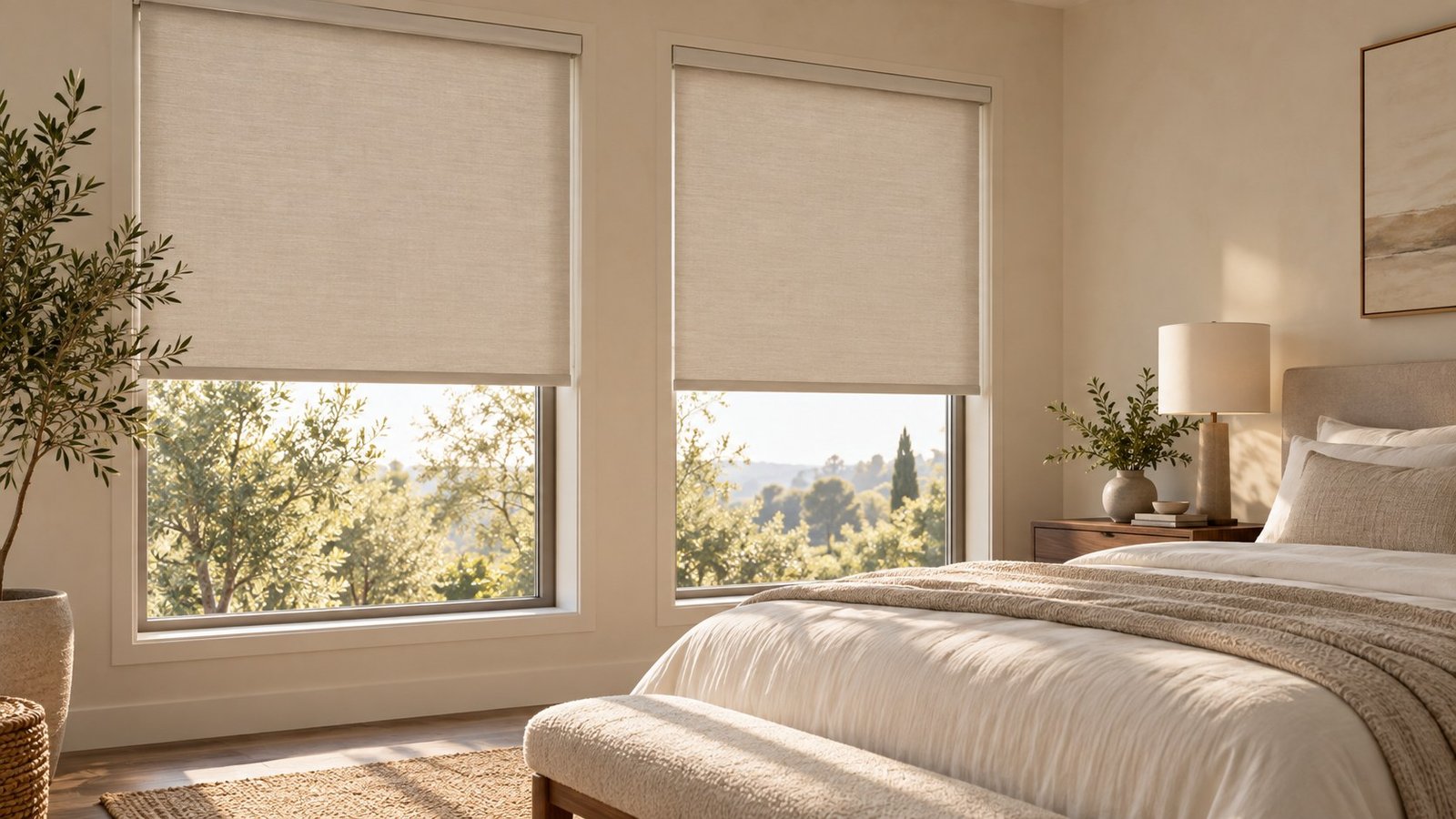



Find the gap.
Choose the right fix.
Blackout shades can still let light in around the fabric. Bright side strips, a glow above the roll or an uncovered bottom edge need different checks. Changing the material alone may leave the same light path.
Start with the installed coverage, then compare compatible light blockers, side tracks, outside mounting or a second treatment.
Sources checked October 16, 2026. Research-based guidance; no hands-on darkness testing.

Where is the light entering?
Check the fully lowered shade at the time of day that causes the problem. Take a photo and identify the location before asking for a replacement or an accessory. The table is our troubleshooting checklist, not a diagnosis of a particular installation.
| What you see | What to confirm | Useful next discussion |
|---|---|---|
| Light through the fabric | Exact material, liner and ordered opacity. | Ask the seller whether the supplied fabric matches the approved order. |
| Bright side strips | Finished fabric width and operating clearance. | Compatible blockers, tracks or greater coverage. |
| Light above the roll | Top opening, bracket position and top treatment. | Ask how this particular light path can be covered. |
| Light below the rail | Coverage at the sill and final lowered position. | Have the seller check the size and matching setup instructions. |
| Light between two shades | The gap where the units meet. | Ask for a plan for the joint, not just the outside edges. |
The issue is not limited to rollers: The Shade Store’s cellular FAQ also acknowledges light at the sides of blackout cellular shades.
Light blockers, side tracks, outside mount or drapery?
These are different approaches to coverage. Choose around the existing shade, available space and the path you need to block.
L-shaped light blockers
A strip covers the exposed area beside the fabric. SmartWings Light Blockers are polystyrene L-shaped pieces for inside mounts, with screw or adhesive attachment.
Check before buying: the listing names blackout rollers and Harmony Duo Plus compatibility, excludes stucco and says removed adhesive cannot be reused. Confirm your exact shade and surface with the seller.
U-shaped side tracks
SmartWings Side Rail Tracks use aluminum U-shaped channels with internal fiber brushes. The listing names blackout rollers and Harmony Duo Plus.
Check before buying: rail position, mounting space and fabric travel. The stated attachment choices are screws or nano tape; the listing excludes stucco and says removed tape cannot be reused. Confirm the mount configuration rather than assuming every track fits every shade.
Outside mounting
A shade extending beyond the opening can improve coverage. Bracket projection and actual fabric overlap still matter; a glow may remain around a treatment that stands away from the wall.
Check before buying: the product’s measuring rule, finished fabric width, overlap and clearance around trim or handles. See our inside vs outside mount guide.
Layered blackout drapery
Consider this if you want to retain the shade and have space for another treatment. Blinds.com describes drapery as an option for covering light gaps.
Check before buying: lining, closed coverage, top and side return, rod or track, and operation around the shade. Include the second treatment and hardware in the quote.
For the general mounting and layering approaches, see Blinds.com’s light-gap guide. Product examples above are not universal compatibility claims or tested darkness rankings.
Side coverage is one part of the plan. A blocker beside the fabric does not automatically address a gap above the headrail, below the shade or between adjoining units. Ask the seller to account for every visible path.
Buying a shade with tracks? Check the exact lift.
A complete track system is another option when ordering a new shade. SelectBlinds Click2Fit Total Blackout Roller Shades includes side and bottom tracks and is specified for inside mounting only.
| Click2Fit configuration | Minimum inside depth | Flush inside depth |
|---|---|---|
| Cordless lift | 2⅝ inches | 3 inches |
| Remote motorization | 3¼ inches | 3¾ inches |
Example: a 3-inch recess meets the listed cordless flush-depth figure but is below the remote-motorized minimum. Depth alone does not confirm fit; check the frame shape, size limits and other clearance requirements.
Use the product-specific configuration table, not just the general minimum at the top of the page. The installation guide also identifies headrail covers and sealing strips. Review the matching installation instructions with the seller.
If avoiding drilling is part of the decision, compare the no-drill motorized shade options and save the no-drill measurement checklist.
Order width and fabric width are different checks
For an inside mount, follow the manufacturer’s measuring instructions and deductions. Do not add width to compensate for a gap unless the seller explicitly instructs you to do so for that product.
A wider order may add less fabric coverage than you expect.
Suppose the window opening is 34 inches, the ordered unit is 36 inches and the seller confirms a finished fabric width of 34½ inches.
(34½ − 34) ÷ 2 = ¼ inch per side
That is the overlap if the fabric is centered—not 1 inch per side based on the ordered unit. These are hypothetical measurements, not a recommended allowance or a brand’s deduction rule. Control hardware may also make the left and right clearances unequal.
Ask the seller to put the actual fabric dimensions and planned coverage in writing. For the wider material decision, compare blackout, light-filtering and solar fabrics.
Send one complete request to the seller
- Identify the window: size, mount, depth and photos of the light paths.
- Identify the shade: model, fabric, lift, finished fabric width and current top treatment.
- Confirm the proposed fix: exact accessory, compatible mount, surface, clearance and which paths it covers.
- Confirm access: the shade must still move properly and allow access to any charging port or serviceable parts.
- Record the complete price: shade, blockers or tracks, top treatment, controls, second layer, installation, shipping and tax.
A request you can copy
“My [shade/model] lets light in at [location]. Please confirm the expected fabric width and clearance for my [mount/window]. Which compatible fix addresses this path? List its dimensions, attachment method, remaining gaps and complete installed price. Please also explain the remedy if the supplied item differs from the approved specification.”
Keep the response with your measurements. Our 34 × 72-inch quote method helps compare the complete package.
Common blackout shade light-gap questions
Are gaps normal with blackout shades?
Operating clearance can leave visible light around the fabric. The expected gap depends on the product and mount. Compare it with the seller’s specification before assuming the shade is defective.
Will a valance stop light at the top?
Ask whether that exact valance and bracket arrangement covers the opening you can see. A decorative top treatment should not be treated as a sealed blackout system without confirmation.
Can I add any side channel to an existing shade?
Confirm compatibility first. The SmartWings examples above name particular shade types; check your model, mount, available space and attachment surface before ordering an accessory.
Will outside mounting guarantee complete darkness?
No. Added overlap can help, but the fabric’s distance from the wall and remaining top, bottom or joint gaps still affect coverage. Judge the complete installation.
Plan the rest of the window.
Choose the mounting position.
Check recess depth, trim and the coverage outside the opening.
Compare mounts →
Need a no-drill motor?
Compare mounting systems, controls and the complete order.
Compare no-drill options →
Plan evening privacy.
Understand openness and the role of a second treatment.
Read the privacy guide →Compare brand details in our SmartWings, SelectBlinds and The Shade Store profiles. For construction differences, see cellular vs roller shades.
Sources & scope
Checked October 16, 2026. Official specifications support the product examples; diagnosis prompts, quote requests and the width calculation are our planning aids. We have not measured darkness or tested these accessories. Follow the exact product’s instructions.